
Why Timber Doors Are Ideal for Healthcare Environments
11th June 2025
Designing for healthcare means walking a fine line between function, compliance, and care-focused design. Every product specified must support safety, hygiene, accessibility, and performance — while also contributing to a calm, healing environment.
Timber doors may not be the first material that comes to mind when you think “clinical,” but in reality, they’re one of the most effective and versatile choices for modern healthcare projects — when specified correctly.
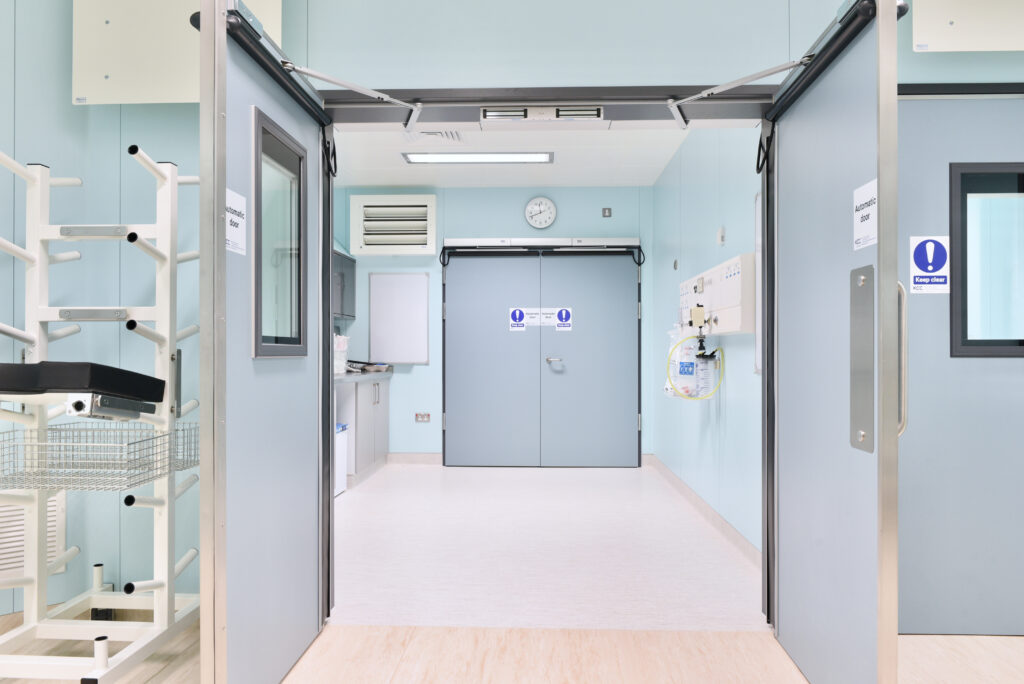
Healthcare environments are high-traffic, high-impact spaces. Doors are constantly in use — from hospital wards and operating theatres to consultation rooms and staff areas.
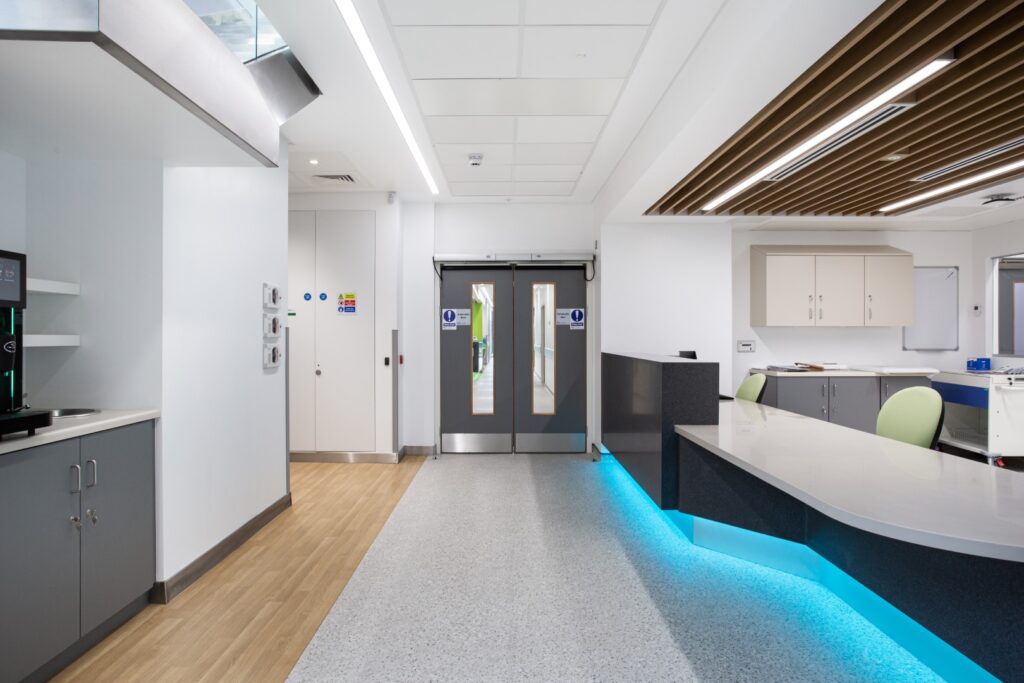
Modern timber doorsets, particularly those with laminate or PVC postformed finishes, are designed to withstand intensive use, trolley impacts, and frequent cleaning. Reinforcements like integrated edge protectors, anti-finger trap systems, and durable cores allow timber doors to meet the durability demands of relevant healthcare standards.
Infection prevention is critical in healthcare — and materials must support stringent hygiene protocols. Timber doors with non-porous, antimicrobial surface finishes such as high-pressure laminate (HPL), PVC encapsulation, or postformed edges help eliminate dirt traps and make cleaning easy and effective. Unlike painted steel doors, well-designed timber doors won’t chip or rust — a key advantage in wet or humid areas like washrooms or sluice rooms. Also, manufacturers can offer doorsets pre-assembled in controlled environments, reducing contamination risk during on-site installation.
Healthcare isn’t just about clinical outcomes — it’s also about comfort, privacy, and recovery. Acoustic control plays a huge role in reducing patient stress, supporting sleep, and maintaining confidentiality. Timber doors are naturally dense and, when combined with certified acoustic seals and compatible hardware, can achieve high Rw ratings (typically Rw 30–40 dB) to support sound insulation requirements in areas such as consulting rooms, multi-bed wards, treatment and recovery areas or staff and family break spaces.
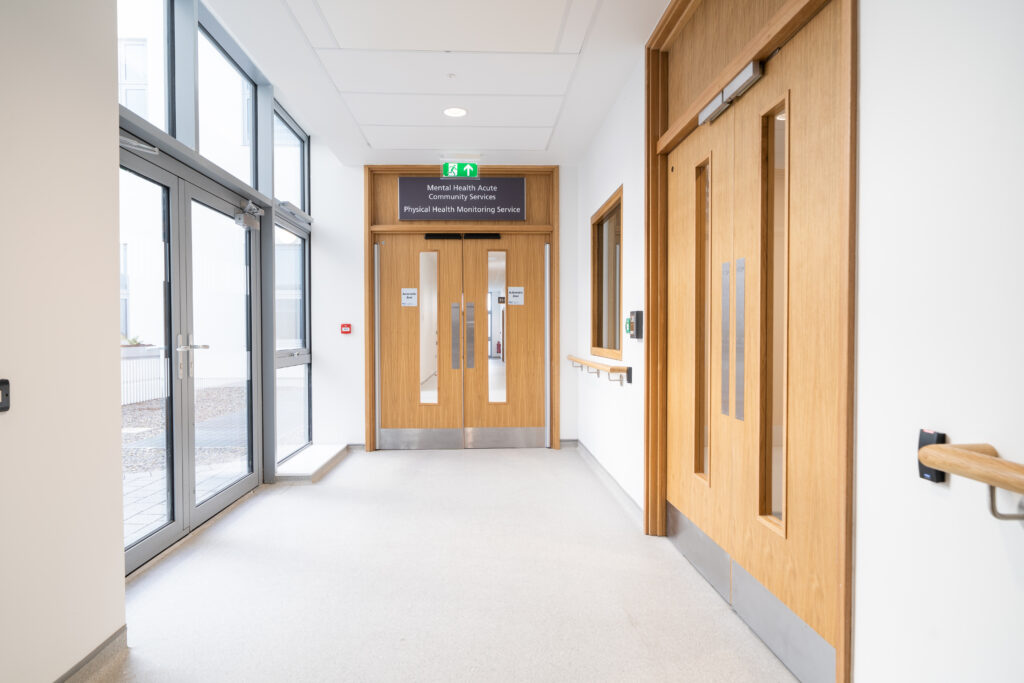
Fire safety is non-negotiable — especially in buildings where evacuation can be complex or delayed. Timber fire doorsets can be tested and certified BS476 Part 22 for Fire up to 120 minutes and integrate seamlessly access control systems and hold-open devices. Paired with intumescent seals, smoke control systems, and correctly specified ironmongery, timber doors offer full compliance without compromising visual appeal.
Beyond function, there’s something deeply human about timber. In care environments where clinical materials can feel cold or impersonal, timber adds a sense of warmth and familiarity. Timber veneers or wood-effect laminates can soften institutional spaces and help patients feel more at ease — a benefit particularly valued in mental health units, elder care, and children’s services.
Timber doors have come a long way from the traditional solid-core leaf. Today’s healthcare-ready timber doorsets combine resilience, hygiene, safety, and style — making them an ideal choice for environments that care for people at every stage of life.
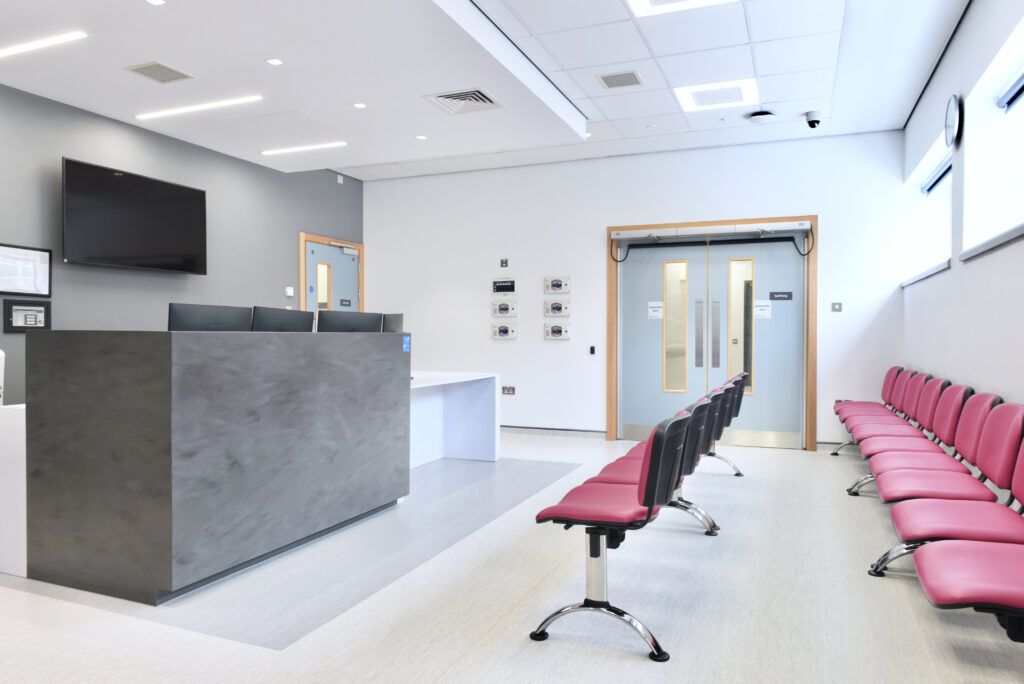
Not all timber doors are created equal. For healthcare, it’s essential to:
- Use pre-tested, certified doorsets (not just door leaves)
- Specify appropriate finishes (laminate, PVC, or antimicrobial coatings)
- Ensure hardware and seals are compatible with hygiene and fire/acoustic requirements
- Choose suppliers experienced in healthcare compliance
Get in touch with our door specialists to discuss your specific project requirements
Northern Ireland
3 Nicholson Drive, Mallusk, Newtownabbey, Co Antrim, BT36 4FH+44 (0)28 9446 6422
[email protected]
Specialists in
high performance
doorsets